Banned and Buried: What Happens to Toxic Gaming Communities After the Platform Pulls the Plug
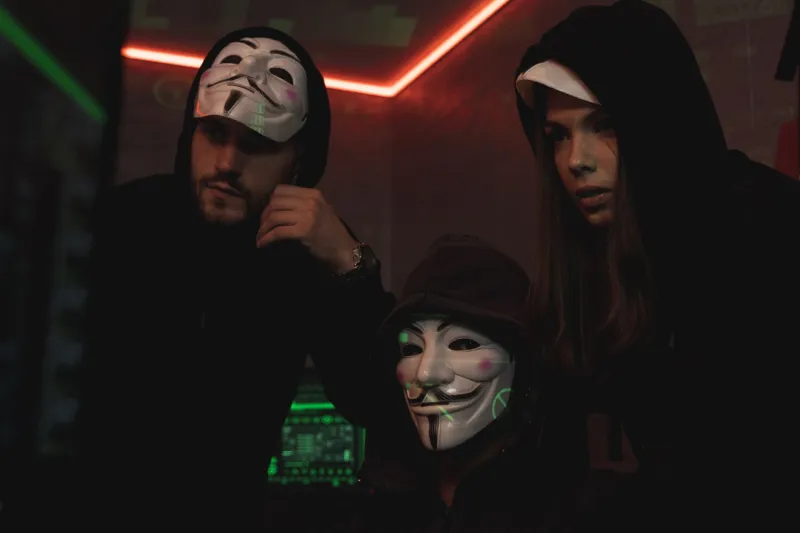
Every few months, a gaming community gets the axe. A subreddit gets quarantined. A Discord server gets nuked. A Twitch channel gets permabanned. The platform makes an announcement, the headlines run for a day or two, and everyone moves on assuming the problem is solved.
It isn't. Not even close.
What actually happens when you deplatform a tight-knit — if deeply toxic — gaming community is less like a demolition and more like squeezing a water balloon. The pressure doesn't disappear. It just relocates.
The First 48 Hours After the Ban
The immediate aftermath of a major platform ban is chaotic, but organized chaos. These communities have usually been preparing for this moment. Moderators have backup servers. Trusted members have been pre-approved for invite lists. Alternative platforms — Guilded, Revolt, private Matrix servers, even old-school forums running on self-hosted infrastructure — are already in place before the ban hammer even lands.
One longtime moderator of a banned FPS-focused Discord server (who agreed to speak on background) described the process like a fire drill: "We'd been warned by platform ToS violations twice before the final ban. By the time it happened, we had three mirror servers ready. We lost maybe 15% of the community in the transition. The other 85% were in the new server within two days."
That 15% loss sounds significant, but consider what it means in practice. The members who didn't make the jump were generally the most casual, the most peripheral. The ones who followed were the core — the most committed, the most loyal, and often the most extreme.
Deplatforming doesn't thin out a toxic community. It concentrates it.
The Psychology of the Bunker
Once a community moves into a private, invite-only space, something shifts in its psychology. The shared experience of persecution — even when that persecution is completely justified — becomes a binding agent. Getting banned together creates an us-versus-them identity that's almost impossible to dissolve from the outside.
Dr. research in online community behavior (cited across multiple studies in platform governance literature) consistently shows that externally imposed exile tends to radicalize rather than moderate group behavior. When a community loses access to mainstream spaces, it also loses exposure to dissenting voices, outside perspectives, and the natural friction that keeps group dynamics from spiraling.
In the bunker, the loudest voices win by default. Moderation, when it exists at all, tends to enforce conformity rather than correct it. The moderators themselves — who in the pre-ban days might have been a check on the worst behavior — often become the community's most powerful authority figures, with no external accountability.
"When we were on Reddit, we had to at least pretend to follow the rules," said one former member of a banned gaming subreddit who eventually left the private server after what he described as an escalation in rhetoric. "Once we moved, there were no rules except what the mods said. And the mods wanted engagement. Outrage drove engagement. So outrage became the whole culture."
Where They Actually Go
The migration paths are fairly predictable at this point, and they follow a rough hierarchy of visibility versus security.
The first stop is usually a semi-public alternative platform — Guilded, Rumble, or Odysee for video-focused communities. These platforms have positioned themselves explicitly as free-speech alternatives, which means they attract both legitimate users frustrated with mainstream moderation and communities that got kicked out of mainstream spaces for genuinely harmful behavior. The two groups mix freely, which muddies the water considerably.
From there, the more extreme segments migrate further inward. Private Discord servers with multi-step verification. Telegram channels with 4-digit invite codes that rotate weekly. In some cases, fully encrypted platforms like Element or Session that offer virtually zero ability for outside observation.
By the time a community reaches that final tier, it's essentially invisible to platform moderation, law enforcement, and journalists alike. Whether it festers or evolves in that space depends almost entirely on internal leadership — and internal leadership in these environments is rarely a moderating force.
The Ones That Actually Changed
It would be dishonest to say every banned community just gets worse. Some don't.
There are documented cases of gaming communities that went through a deplatforming event, lost their most toxic members in the transition chaos, and rebuilt around a more focused identity. A competitive game's community that got banned for harassment campaigns sometimes reconstitutes itself as a purely strategy-focused group, shedding the culture-war baggage in the process.
But these cases share a common thread: active, intentional leadership that used the transition as an opportunity to reshape the community's identity. Without that, the default outcome is entrenchment.
"We had a chance to start fresh," said the moderator interviewed earlier. "Some of us wanted to. But the loudest voices in the room had been waiting for exactly this situation — a space with no oversight where they could finally say whatever they wanted. We lost that argument pretty fast."
The Platform Problem Nobody Wants to Solve
Here's the uncomfortable reality that platform companies, game publishers, and esports organizations mostly avoid discussing: deplatforming is a visibility solution, not a behavior solution. It removes a problem from a company's liability exposure without actually addressing the underlying conditions that created the community in the first place.
Banning a toxic server makes a platform's metrics look cleaner. It does not make the internet safer, the game's community healthier, or the individuals involved less radicalized. If anything, the research suggests it accelerates the radicalization timeline by removing the last external friction points.
The hard work — community intervention, moderation support, addressing the in-game conditions that breed the toxicity in the first place — doesn't happen at the platform level. It rarely happens at all.
So the communities keep moving. Deeper, darker, and more convinced than ever that everyone outside their walls is the enemy.
The ban didn't fix anything. It just made the problem harder to see.