Blood In, Blood Out: Why the Harshest Gaming Communities Create the Realest Friendships
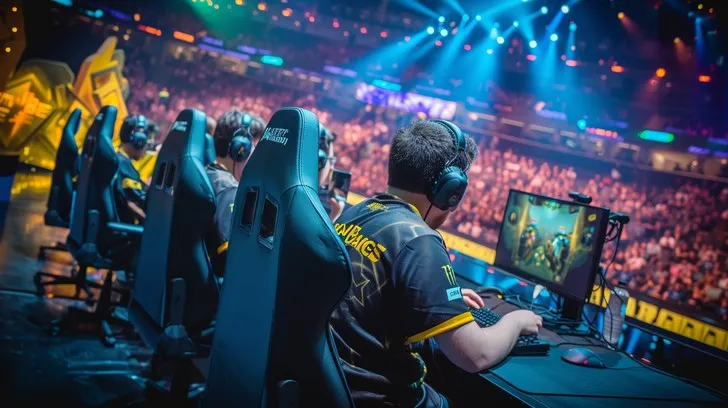
Photo: competitive gamers intense focus esports tournament LAN event, via images.justwatch.com
Everyone wants to talk about toxic gaming communities like they're a disease that needs curing. Twitch chat moderation tools. Discord server rules the length of a mortgage agreement. Community managers posting passive-aggressive "be kind" banners every other Tuesday. The industry has spent the better part of a decade trying to sand down the rough edges of competitive gaming culture, and the result? Sanitized spaces where nobody says anything real and loyalty is about as deep as a puddle in July.
But spend five minutes inside a genuinely cutthroat competitive scene — old-school Street Fighter locals, high-ELO League lobbies, underground Smash brackets — and you'll find something nobody in a corporate community management role is willing to admit out loud: the brutality is the point. The people who survive the gauntlet don't just become better players. They become family.
The Initiation Nobody Talks About
Here's the thing about harsh gaming communities that mainstream gaming culture refuses to acknowledge — entry is earned, not given. When you walk into a fighting game local for the first time and get 3-0'd in front of twenty people who are openly laughing, two things happen. Either you quit and go home, or you come back next week with something to prove.
The people who come back? Those are your people.
There's a psychological mechanism at play here that social scientists call "high-cost signaling." The basic idea is that the harder something is to get into, the more you value your membership once you're in. Fraternities understand this. Military units understand this. And competitive gaming communities — whether they know it consciously or not — have been running this playbook for decades.
Marco, a 28-year-old Tekken player from Chicago who's been competing in locals since he was sixteen, put it plainly: "When I first showed up, dudes were merciless. They'd tell you exactly what you were doing wrong, no sugarcoating. At first I hated it. Then I realized — nobody was wasting time being fake with me. They respected me enough to be honest."
That distinction — respect through honesty — is the thing that separates a genuinely tough community from one that's just mean for the sake of it.
Trash Talk as a Love Language
This might sound insane if you've never lived it, but hear it out: trash talk is intimacy.
Not the anonymous "kys" from a random Overwatch player you'll never see again. That's not trash talk — that's just noise from someone who doesn't matter. Real trash talk exists between people who know each other. It's specific. It's earned. It references the last time you choked at a crucial moment, the bad habit you still haven't fixed, the matchup you've been ducking for three months.
When your teammate tells you "bro, you've been falling for that same bait since 2021," that's not an insult. That's proof they've been watching you closely enough to catalog your mistakes. That's attention. That's investment.
Psychologist Dr. Jennifer Goldman's research on competitive group bonding (published in the Journal of Social Psychology, 2019) found that groups which engaged in what she called "mutual ribbing" — teasing grounded in shared history and genuine affection — reported significantly higher levels of trust and group cohesion than groups that maintained strictly polite interactions. The key variable wasn't the harshness of the communication. It was whether both parties understood the underlying respect.
Competitive gaming communities figured this out without reading a single academic paper.
When Brutal Feedback Builds Better Players
There's a reason the most feared coaches in esports history weren't known for positive reinforcement. kkOma, who coached SKT T1 to multiple World Championship titles, was notorious for sessions that left players emotionally wrecked. Former teammates have described review sessions where every single mistake was catalogued, replayed, and dissected without a single word of comfort.
And those players won everything.
The difference between a community that builds you up through brutal feedback and one that just destroys you comes down to intent and follow-through. Are people pointing out your mistakes because they want you to fix them, or because they want to feel superior? Is the criticism specific and actionable, or is it just vague contempt?
In the toughest competitive gaming scenes, the feedback culture tends to be ruthlessly useful. Nobody's telling you that you suck and walking away. They're telling you why you suck and then staying to run it back. That's the code. That's the unspoken contract that holds these communities together.
Jordan, a 24-year-old Valorant player who climbed from Silver to Radiant over two years in a notoriously blunt Discord server, described it this way: "Those guys would tear apart my VODs like a forensic team. Nothing was off limits. But every single session ended with 'here's what to work on.' They weren't trying to break me. They were trying to make me harder to break."
Where the Line Actually Is
None of this is an argument that all toxicity is secretly good for you. That's not the point.
The line exists, and it matters. The difference between a hard community and a genuinely toxic one is whether the culture punishes failure or punishes people. A scene that clowns on your gameplay and then buys you a drink after the bracket? That's one thing. A scene that makes you feel like your existence is the problem? That's something else entirely, and it drives people out of the game permanently.
The communities that last — the ones with twenty-year histories, the ones where guys are still showing up to locals in their thirties — are the ones that learned to separate the player from the play. You can be absolutely ruthless about someone's decision-making and still have their back completely when it counts.
That balance is rare. When you find it, you don't let it go.
The Loyalty Nobody Can Explain
Ask anyone who's been through the grind of a genuinely tough competitive community what they'd do for the people they came up with, and the answers get uncomfortable fast. These aren't people who met at a networking event. These are people who watched each other fail publicly, repeatedly, and came back anyway.
There's a bond that forms in shared suffering that no amount of positivity initiatives can replicate. You can't manufacture the feeling of having someone in your corner who has seen you at your absolute worst and is still there on Saturday morning, controller in hand, ready to run it back.
The harshest gaming communities aren't broken. They're just built different — and the people who make it through are bonded in a way that "good vibes only" spaces will never understand.