Career Enders: The Catastrophic Esports Plays That Blew Up Rosters, Sponsors, and Legacies
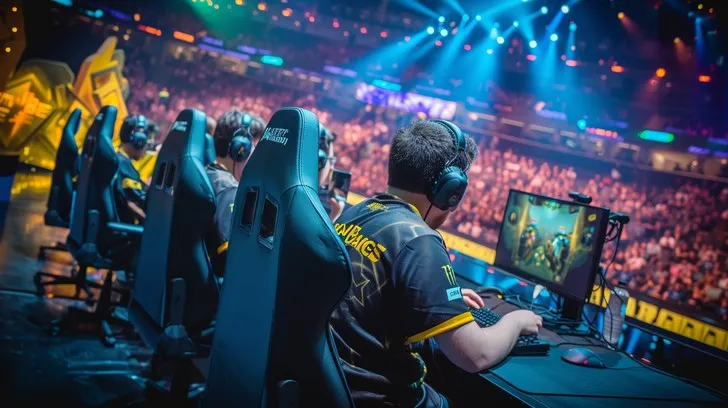
Photo: esports player devastated loss tournament stage screen, via images.stockcake.com
Esports doesn't do second chances quietly. One catastrophic play, one disastrous draft call, one inexplicable decision on the biggest stage in front of millions of viewers — and the dominoes don't just fall, they explode. Sponsors pull out. Organizations restructure. Players get benched, released, and quietly blacklisted from the scene they spent their entire adolescence building toward.
This isn't about bad days or unlucky breaks. This is about the moments that became permanent entries in the "what were they thinking" hall of fame. The plays so catastrophically bad that they rewired how the entire industry thinks about pressure, preparation, and the cost of choking when the money is real.
Buckle up. This is going to hurt.
The Curse of the Grand Stage Choke
Before we get into specific disasters, it's worth understanding why grand stage failures hit so much harder in esports than in traditional sports.
In the NFL, a quarterback who throws a pick-six in the Super Bowl will get a hundred hot takes and then, usually, another season to prove himself. The media cycle moves. Fans have short memories when wins start stacking up again.
In esports, the replay is always one click away. Forever. The moment lives on YouTube, on Reddit threads that resurface every anniversary, in highlight reels that open with "remember when..." The permanence of the failure is baked into the medium. And sponsors — who are often newer to the space and deeply allergic to negative press — react accordingly.
Number 5: The Baron Throw That Launched a Thousand Memes
League of Legends has produced more high-stakes disasters than arguably any other esport, but few hit the collective community as hard as the infamous "baron throw" moments that have plagued NA teams on international stages.
The pattern is almost ritual at this point: NA team overperforms in group stage, builds a commanding lead in a knockout match, attempts to secure Baron Nashor to close the game — and somehow turns a certain victory into a catastrophic defeat. The specifics change. The outcome doesn't.
What makes these moments financially devastating isn't just the loss. It's the narrative that forms around them. When a team throws a winnable game at Worlds in front of an international audience, the "NA can't close" meme machine kicks into overdrive. Sponsors selling to a global audience start asking uncomfortable questions about whether association with a team that's become a punchline is actually good for their brand.
Several North American organizations saw sponsorship conversations stall or collapse entirely following high-profile international failures. The teams that suffered most were the ones where the throw wasn't just a tactical error — it was the latest chapter in an ongoing story of underperformance.
Number 4: The Roster Move That Burned $2 Million
In 2018, one prominent North American CS:GO organization — and there are enough candidates that naming one almost feels unfair — made a blockbuster roster acquisition that was supposed to finally push them into top-five global contention. The price tag, including buyouts and initial salaries, reportedly cleared seven figures.
The team never cracked the top ten. Internal conflicts, a coaching situation that sources described as "a disaster from week one," and a series of early tournament exits turned a marquee investment into a cautionary tale that got whispered about at every subsequent roster deadline.
The sponsorship fallout was swift. Two major sponsors declined renewal conversations. The organization's valuation — which had been climbing on the back of the acquisition hype — took a measurable hit. Within eighteen months, the roster had been almost entirely dismantled.
The lesson the industry took from it: spending big on star names without solving for team chemistry is just an expensive way to fail publicly.
Number 3: The Draft That Decided a World Championship (For the Wrong Team)
Dota 2's The International is the richest esports event on the planet. Prize pools have cleared $40 million. Careers are made and ended in a single week.
In one of the most discussed draft failures in TI history, a heavily favored team — sitting on a 1-0 series lead in an elimination match — picked a lineup that their own analysts had reportedly flagged as problematic against the specific heroes their opponents favored. The reasoning, as reconstructed later by community analysts, appeared to be a combination of overconfidence and a fundamental misread of how the meta had shifted over the tournament.
They lost the series. They lost their shot at the title. And the team's captain, who had made the final draft calls, became the subject of an extended community post-mortem that was as brutal as any in the game's history.
The organization did not retain the full roster the following season. The captain spent the better part of two years rebuilding credibility before finding stable footing again on a competitive team.
Number 2: The Defuse That Wasn't
CS:GO has a specific category of failure that is uniquely, almost beautifully cruel: the botched defuse on a match point.
The scenario requires no elaboration for anyone who's watched competitive Counter-Strike. Clock ticking. Bomb planted. Defuser in hand. The entire match — sometimes the entire tournament — riding on four seconds of execution. And then, somehow, a miscommunication, a missed input, a momentary lapse in awareness, and it's over.
Several high-profile instances of this failure type have occurred at major tournaments with direct prize pool implications. In at least two documented cases, the team that suffered the botched defuse lost not just the round, but the map, the match, and their tournament position — dropping from a placing that would have triggered performance bonuses in their contracts to an early exit with nothing.
One player who became the focal point of a widely-circulated botched defuse clip spent months dealing with the fallout — not just from fans, but from within his own organization, where questions about his mental fortitude under pressure led directly to a contract renegotiation that did not go in his favor.
Number 1: The Play That Redefined What "Throwing" Means
The single most financially damaging individual play in esports history — measured by the combined impact on prize money lost, sponsorship fallout, and long-term career damage — is still debated. But the strongest candidate is a moment from a major League of Legends tournament that resulted in a team throwing a match so definitively, so inexplicably, that it became the benchmark all future throws are measured against.
The play involved a player making an aggressive solo move in a position where no competitive analyst, coach, or experienced viewer could construct a justification for the decision. The result was an immediate team wipe, a Baron steal, and a game-ending push that came from a position of near-certain victory.
The organization lost the match. Lost the series. Lost their seeding for the following split. And within sixty days, lost two of their primary sponsors — one of whom explicitly cited "brand consistency concerns" in the termination communication, which is corporate speak for "we don't want to be associated with this."
The player at the center of the play was released before the next season began. It took three years and a complete reinvention of his public persona before he found a stable competitive home again.
The Real Cost of Catastrophic Failure
What all of these moments share isn't just the loss. It's the ripple effect — the way one terrible decision in one terrible moment can restructure an entire organization's financial reality.
Esports operates on razor-thin margins. Sponsorships aren't just bonus money; for many organizations, they're the difference between operating and closing. When a catastrophic moment becomes the defining narrative of a team or player, the sponsors don't stick around to see if the story improves.
The players who clawed back from these moments share one common trait: they stopped trying to escape the narrative and started owning it. Acknowledge the failure. Show the work. Let the results do the talking.
It's the only move left when you've already made the worst one.