Paying to Suffer: How Battle Pass Systems Are Engineered to Drain You Dry
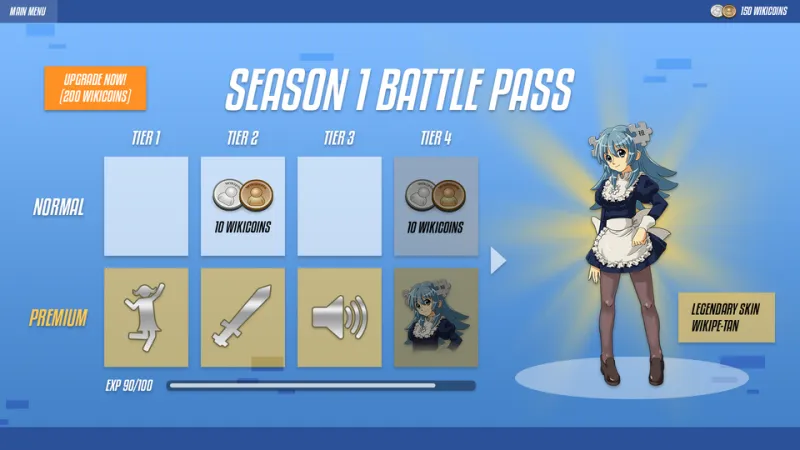
Photo: Zxcvbnm, CC BY-SA 4.0, via Wikimedia Commons
Let's be real for a second. You've been there. It's 11:45 PM on a Tuesday, you've got work in six hours, and you're grinding through a battle pass challenge you genuinely don't care about — not because it's fun, but because the season ends in three days and you already paid for the thing. That's not gaming. That's a second job with worse benefits.
Welcome to the live-service era, where the product isn't the game — it's your time, your attention, and eventually your wallet.
The Illusion of Value
Here's how the hustle starts. You drop $9.99, sometimes $14.99, on a battle pass that promises a hundred-plus tiers of rewards. Skins, emotes, currency, XP boosts — the whole catalog looks massive on paper. But the math is always stacked against you.
Most battle pass systems are calibrated so that a casual player — someone putting in maybe an hour a day — finishes somewhere around tier 60 to 70 by season's end. Naturally, the best cosmetics sit at tiers 85 through 100. You either grind harder, buy XP boosts with real money, or watch that legendary skin disappear forever when the season clock hits zero.
That's not a coincidence. That's a design document.
Developers have entire teams dedicated to what the industry calls "engagement metrics" — which is a clean corporate term for figuring out exactly how much friction keeps players logging in without making them quit entirely. It's a razor's edge, and they've gotten disturbingly good at walking it.
FOMO Is the Product
Fear of missing out isn't a side effect of battle pass culture. It's the engine. Everything about seasonal content is built around scarcity and urgency. Limited-time skins. Time-locked challenges. Rotating shop items that vanish in 24 hours. The message is always the same: act now or lose forever.
Games like Fortnite, Apex Legends, and Call of Duty have turned this into an art form. Fortnite's early seasons practically invented the modern FOMO loop — a combination of a ticking season clock, exclusive cosmetics, and a narrative drip-feed that made logging in feel like watching live TV. Miss an event and you missed it for good. That kind of urgency hooks people who wouldn't otherwise care about a cartoon llama backpack.
And it works. Epic Games reportedly cleared over $5 billion in revenue from Fortnite in its peak years. You don't hit numbers like that by making people feel relaxed.
The Grind Is Artificial and They Know It
Here's what makes modern battle pass systems particularly cynical: the grind is deliberately inflated. XP rewards are tuned low enough that organic play — just enjoying the game normally — won't get you through the pass in time. Specific daily and weekly challenges exist to funnel you into game modes you might not even like, just to hit targets.
Call of Duty's battle pass system has been criticized repeatedly for exactly this. Players have documented that certain challenges require you to use specific weapons or play specific modes that offer the worst experience per hour of time invested. It's not about making the game fun. It's about extending your session time and increasing the likelihood you'll crack and buy a tier skip.
Rocket League's transition to a live-service model post-Epic acquisition drew massive backlash for similar reasons. A game that used to reward you for playing became a game that rewarded you for paying. The community noticed. The reviews reflected it. And the model stayed anyway, because the numbers still worked.
The Psychology Behind the Hook
Game designers aren't just borrowing from psychology — they're running a clinic on it. Variable reward schedules, the same mechanism that makes slot machines addictive, are baked into loot systems and challenge structures. You never quite know what the next tier will drop, which keeps the dopamine loop spinning.
Sunk cost fallacy is another heavy hitter. Once you've paid for a pass, your brain fights hard to justify that purchase. You'll play through content you hate because quitting feels like admitting you wasted money. The developers know this. They're counting on it.
Then there's the social layer. When your squad is all grinding the same pass, logging off feels like letting the team down. Live-service games build communities around their seasonal content specifically because social pressure is one of the most effective retention tools available.
Not All Battle Passes Are Built the Same
To be fair, some developers have pushed back against the predatory end of the spectrum. Halo Infinite launched with a battle pass that never expired — you could finish it at your own pace across multiple seasons. It was widely praised, though the overall live-service model still had its issues. Path of Exile's league system gives players a ton of free content each cycle without locking the best stuff behind a paywall grind.
These examples exist, but they're the exception. The industry default leans hard toward manufactured urgency and stretched timelines because it generates more revenue than letting people play comfortably.
What You Can Actually Do About It
The honest answer is that individual choices don't move the needle much when millions of other players are still buying in. But awareness matters. Knowing you're being manipulated is at least half the battle.
Set a time limit before you buy. If you can't realistically hit the content you're paying for, skip the pass. Check community reviews mid-season — Reddit and Discord communities are usually brutally honest about whether a pass is worth grinding. And if a game starts feeling like an obligation rather than entertainment, that's your cue to step away. No skin is worth your sanity.
The Crni Bombarder rule is simple: games should hit you hard and leave you wanting more. The moment a game starts feeling like it's hitting you for sport, drop it and find something that earns your time.
Because here's the truth nobody in the live-service industry wants you to internalize: your time is the most valuable currency in the equation. Not V-Bucks. Not COD Points. Your actual hours. Spend them somewhere that respects the trade.