Villains Who Win: How Gaming's Most Ruthless Anti-Heroes Took Over and Never Looked Back
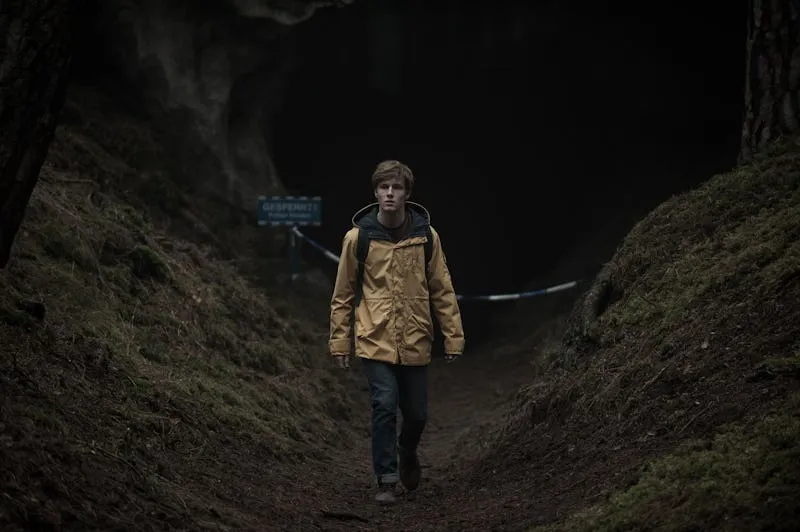
Photo: dark moody video game villain anti-hero character cinematic, via imgix.bustle.com
There was a time when the hero of your game was easy to identify. They had a righteous cause, a tragic backstory that justified their goodness rather than corrupted it, and a habit of doing the right thing even when it cost them everything. Those characters still exist. They're just not the ones players are talking about anymore.
The protagonists dominating conversation today are the ones who don't apologize. The fixers, the mercenaries, the architects of chaos who operate by their own code — or no code at all. And American gaming audiences, in particular, can't seem to get enough of them.
The Blueprint That Changed Everything
If you want to trace the lineage of the modern gaming anti-hero, you have to start with a couple of franchises that were willing to hand the player something genuinely dangerous: moral freedom.
Hitman gave you Agent 47 — a genetically engineered assassin with zero emotional attachment to his targets and a wardrobe that never quit. The game didn't frame his work as heroic. It didn't wrap his kills in justification. You were a precision instrument of death, and the artistry was in the execution. Players didn't just accept that premise — they embraced it, speedrunning elaborate murder puzzles with the kind of creative investment usually reserved for puzzle platformers.
Then there's Grand Theft Auto. The series didn't invent the open-world crime game, but it perfected the formula of making you feel genuinely powerful as someone the real world would classify as a monster. GTA V's trio of protagonists — particularly Trevor Philips — pushed this further than anyone expected a major studio to go. Trevor wasn't a lovable rogue. He was genuinely frightening. And players absolutely loved him for it.
These weren't accidents. They were design philosophies built on a simple insight: players wanted to explore the parts of themselves that polite society doesn't allow.
The Psychology of Playing the Bad Guy
There's real research behind why morally complex characters hit harder than their virtuous counterparts. Psychologists studying narrative transportation — the degree to which a person becomes immersed in a story — have found that morally ambiguous characters actually increase engagement. The cognitive dissonance of rooting for someone doing objectively terrible things keeps your brain active in a way that straightforward heroism doesn't.
When you're playing a clear-cut hero, the moral math is simple. When you're playing a character who just double-crossed their employer, murdered a room full of people, and walked away without a flicker of remorse, your brain has to work. You have to reconcile your real-world values with your in-game choices. That tension is interesting. It makes you lean forward.
Games like Disco Elysium, Cyberpunk 2077, and The Witcher 3 have all capitalized on this by building choice systems where the "right" answer is rarely obvious and the consequences of your decisions feel genuinely weighted. But even within those frameworks, players consistently gravitate toward the harder, colder choices — not because they're cruel people, but because those choices feel consequential.
No Mercy as Character Design
The phrase "no mercy" gets thrown around in gaming contexts a lot, but as a character design principle, it's genuinely powerful. A protagonist who operates without mercy forces the world around them to react authentically. NPCs don't give you a pass. Factions remember what you did. The game world bends — or breaks — under the weight of your choices.
Compare that to a protagonist who the narrative constantly protects. The hero who does something brutal but is immediately forgiven, or whose worst decisions are quietly retconned by a cutscene that reframes them as necessary. Players notice that. It breaks immersion and, more importantly, it breaks trust.
The most compelling anti-heroes in recent gaming history — Red Dead Redemption 2's Arthur Morgan in his darker moments, Spec Ops: The Line's Walker, the Courier in Fallout: New Vegas played at maximum chaos — work because the game commits to their choices. The world doesn't forgive you just because you pressed a button. That accountability, paradoxically, makes the character feel more real.
What This Trend Says About Western Players
It would be easy to read the appetite for ruthless protagonists as cultural pessimism — a symptom of an audience that's given up on idealism. But that reading misses something important.
American gaming culture has always had a complicated relationship with authority and institutional morality. The outlaw archetype runs deep in US pop culture — from Westerns to crime dramas to hip-hop — and gaming's anti-heroes are a direct extension of that tradition. Players aren't celebrating cruelty for its own sake. They're celebrating autonomy. The freedom to exist outside the rules that govern everything else.
In a world where so much of daily life involves navigating systems, institutions, and social expectations, the appeal of a character who simply doesn't — who walks into a room and rewrites its power dynamics through sheer force of will — is enormous. It's not nihilism. It's a fantasy of total agency.
The Craft Behind the Chaos
It's worth noting that great villain protagonists don't write themselves. The reason characters like 47, Trevor, or even the player-character in Prey or Dishonored land so effectively is that the writers behind them understand something crucial: ruthlessness without interiority is just noise.
The best anti-heroes have something underneath the cold exterior. A code, however broken. A wound, however unacknowledged. A moment — brief, maybe never repeated — where you see the person they might have been. That glimpse is what turns a destructive character into a compelling one. Strip it away entirely and you're left with a power fantasy that gets boring fast.
The studios getting this right are the ones investing as heavily in narrative design as they are in combat mechanics. Because the violence means more when the character means something.
The Bombarder Take
Here at Crni Bombarder, we've always had more respect for the player who charges in without hesitation than the one who waits for permission. The anti-hero trend in gaming is that energy made into story — characters who strike first, operate on their own terms, and leave the moral accounting to everyone else.
The genre isn't going anywhere. If anything, as game narratives grow more sophisticated and player expectations for meaningful choice keep rising, the mercenary protagonist is only going to get more complex, more compelling, and more dominant.
Good. The genre needed them.