Crown Snatchers: The Underdog Upsets That Shook Competitive Gaming to Its Core
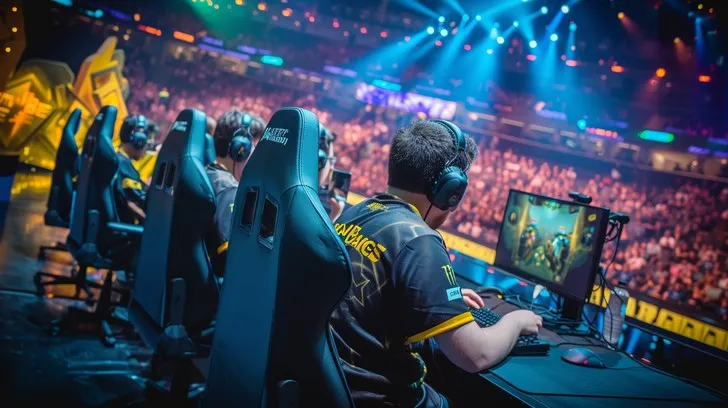
There's a particular kind of silence that falls over an arena when the impossible starts happening in real time. The crowd doesn't know whether to scream or hold its breath. The commentators lose their script. And somewhere on that stage, a player nobody picked to win is quietly tearing apart everything the favorites built.
Competitive gaming has always had its dynasties — the orgs with the budgets, the rosters stacked with proven talent, the fan bases so loud they become a sixth player. But every so often, someone walks in from the outside and burns it all down. Not with luck. Not with a fluke. With calculated, cold-blooded execution that makes the establishment look like it never knew what it was doing in the first place.
These are those moments. The ones that rewrote the record books and left the giants staring at the ceiling, wondering where it all went wrong.
When Nobody Teams Become Everybody's Problem
Let's be honest — most upsets in esports don't come out of nowhere. They come from teams that were overlooked on purpose. Organizations that didn't get the sponsorship dollars. Players who couldn't crack the top-tier rosters, not because they lacked skill, but because they lacked the right connections or the right nationality or the right manager with the right contacts.
The story of competitive gaming is littered with squads that got written off before the brackets even filled in. And the beautiful, vicious thing about competition is that the bracket doesn't care about your Twitter following.
Take the broader pattern across titles like League of Legends, Counter-Strike, and Street Fighter — time and again, the teams that come in as massive underdogs share a few specific traits. They're usually more desperate. They've had nothing handed to them, so they've had to engineer every single edge they could find. And they've had weeks or months of watching the favorites play, studying every habit, every tendency, every moment of arrogance that crept into the champion's game.
When you have nothing to lose and you've done the homework, you become the most dangerous thing in the room.
The Psychology of Pulling the Trigger
Here's what most breakdowns of upsets miss: the mental component isn't just about staying calm under pressure. It's about being willing to go for the kill when the opportunity opens up.
Established champions carry weight. Not just in terms of experience — but in terms of expectation. The moment a top-seeded team starts showing cracks, there's a psychological tax they pay just from being the favorite. The crowd gasps. Their org's social team starts sweating. Their coach calls a timeout that might do more harm than good.
The underdog? They're already playing on borrowed time. Every round they take, every map they steal, every set they push to game five is gravy. That freedom is intoxicating, and the best underdog performances in esports history have come from teams that fully embraced it.
This is what separates a genuine upset from a close match. A close match is two evenly matched teams grinding it out. An upset is when a team that statistically shouldn't be competitive decides that the statistics can get bent, and then proves it on the biggest stage available.
The Moments That Actually Changed the Game
Without getting lost in a laundry list, it's worth zeroing in on what makes certain upsets stick in the memory while others fade out.
The ones that last tend to have a narrative arc. There's usually a defining moment mid-series — a clutch play, a read that shouldn't have been possible, a decision that looks suicidal on paper and genius in hindsight — where you can actually watch the momentum shift in real time. The crowd feels it. The players feel it. And the favorite, for the first time, starts playing not to win but not to lose. That's when it's over.
Some of the most talked-about upsets in Fighting Game Community history happened at EVO — the Super Bowl of the FGC — where players who'd been grinding in relative obscurity for years showed up and ran through brackets that included multiple world champions. The community erupts at these moments precisely because everyone in that building understands how hard the climb was. There's no script. There's no production team setting it up for drama. It just happens, live, in front of thousands of people who suddenly realize they're watching history.
In team-based titles, the calculus is different but the impact is the same. When a squad from a region that was supposed to be a punching bag walks out of a World Championship with hardware, it doesn't just validate that team — it blows open the door for every undervalued region, every overlooked player, every roster that got laughed off the tier lists.
What the Giants Never Learn
If there's a through-line across every major upset in competitive gaming, it's this: the favorites usually saw it coming and didn't adjust fast enough.
The information was there. The warning signs were there. But dynasties develop blind spots. They start preparing for the version of the opponent they expect rather than the version that shows up. They get comfortable with systems and strategies that worked last season without accounting for how much the competition has studied and adapted.
The underdog, meanwhile, has nothing to be comfortable about. Every single preparation session is life or death. They know the favorite's tendencies better than the favorite knows their own, because they've had to. That asymmetry in preparation is where upsets are actually born — long before the tournament starts.
This is the part that should terrify every dominant team in every title right now. Somewhere out there, a squad is watching your VODs with obsessive focus. They're mapping your habits. They're building a counter-strategy around the one thing you do when you're under pressure that you don't even realize you're doing. And they're waiting for the bracket to hand them their shot.
The Legacy of the Disruptors
What happens after the upset matters just as much as the upset itself. Some teams ride the wave and become the new establishment. Others flame out, unable to replicate the lightning-in-a-bottle circumstances that produced the upset in the first place. A few fade back into obscurity, their one shining moment preserved in highlight reels that the community pulls out whenever someone needs a reminder that anything is possible.
But here's the thing — even the ones who disappear afterward leave something behind. They prove the ceiling doesn't exist. They give the next generation of underdogs a reference point. And they make the whole ecosystem harder, sharper, and more unpredictable in the best possible way.
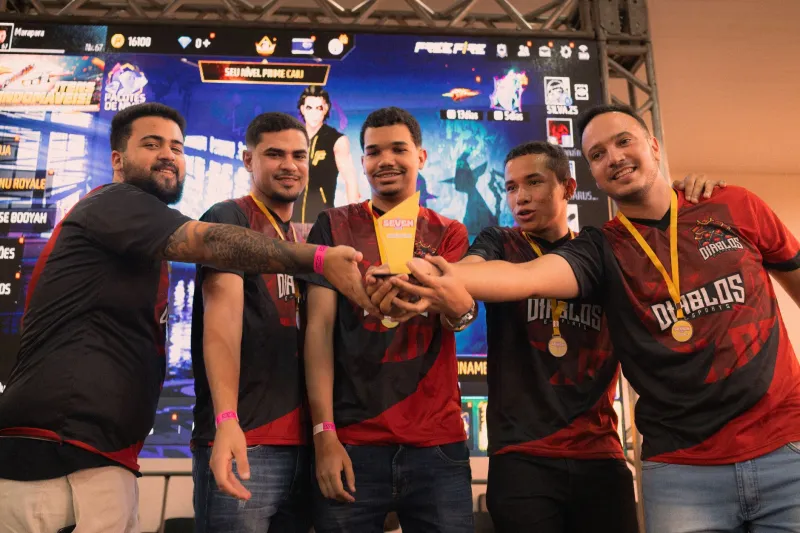
Competitive gaming doesn't need more dominant dynasties. It needs more crown snatchers. More squads willing to walk into the lion's den with nothing but preparation and nerve, and walk out wearing the gold.
The establishment will rebuild. It always does. But it never fully recovers from the memory of the day someone decided the throne was up for grabs — and then went and took it.